Maxine McMahon is one of Australia’s long living Type One Diabetics – how she manages her health at age 86
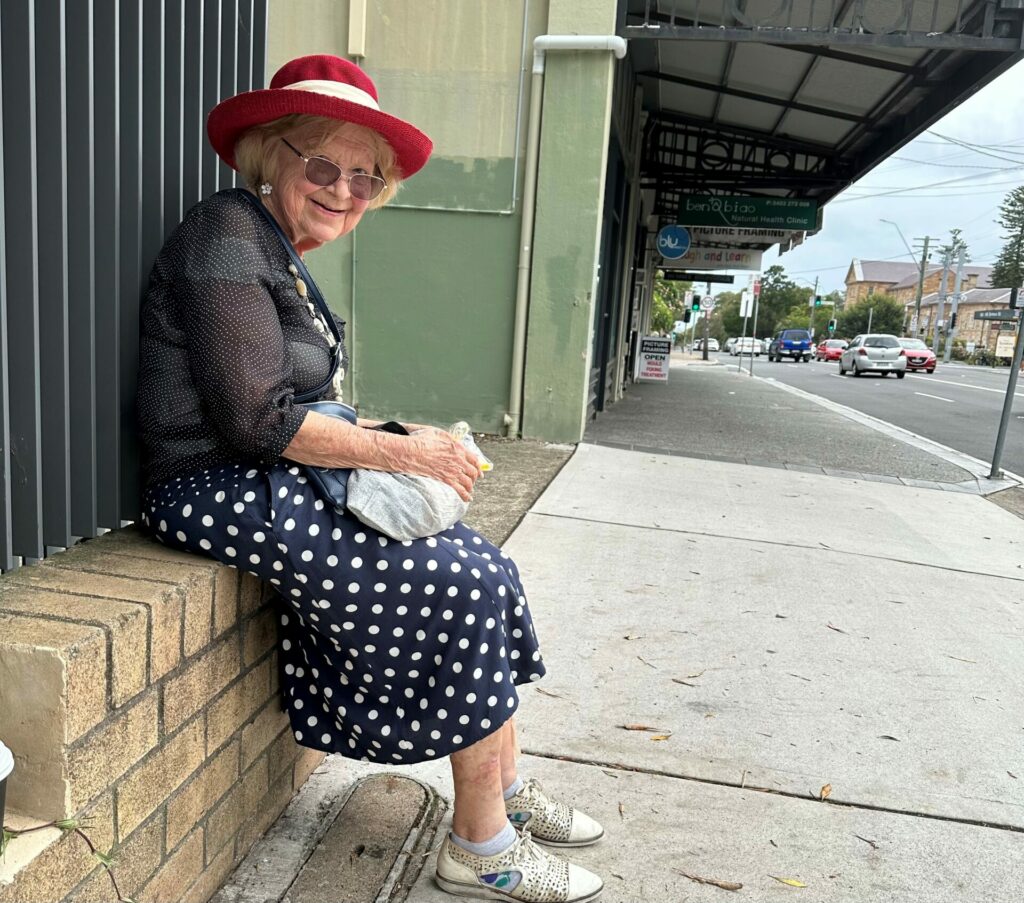
FIVE QUESTIONS is where we ask members of the community to talk about how they stay HEALTHY. Maxine McMahon, who lives in the city CBD, is one of Australia’s longest living ‘Type One’ diabetics. She was diagnosed with diabetes at 22 and is now at 86. She shared this:
I had oats for breakfast, then Chinese noodles, chicken and vegetables for lunch and then my granddaughter who is a chef and lives with me, left me meat balls and vegetables for dinner and yoghurt for dessert. She’s an exceptional chef and worked in England for 13 years.
2. What exercise did you do yesterday?
I walked a lot as I always do.
3. When did you last see a primary health professional?
I often see the doctor because of my diabetes. I listen to the doctor and do exactly what they tell me I should do to stay healthy. I think that’s why I’m here. Occasionally I take too much insulin and have a hypo, or not enough insulin, either of which can result with me going to hospital – mostly St Vincents in Darlinghurst. But generally I if I have too much insulin, causing a hypo, I have a sweet drink and I feel fine.
4. What do you do to improve your mental health?
I like to keep a routine. I go to mass (St Mary’s Cathedral) every day, my daughter calls me at 6pm every day to check on me, I live with my granddaughter and I enjoy walking. Most of my friends have already passed away but I still have my sister in Newcastle. I keep my husband, Newton’s ashes with me. We met in Kindertgarden in St Mary’s and I married him when I was 18 and had two children. Lucky I only wanted two children because I was diagnosed with cancer when the children were young so I didn’t have more. We had a wonderful life together and we have six grandchildren. We travelled around the world. At first we were as poor as church mice. But Newton started selling Aston Martin’s and Rolls Royce’s and thing turned out very well for us.
5. What are your health goals for the next month?
I want to stay healthy and as independent as possible.
Immunisation Weekly Update: Welcome to our weekly Immunisation Update! In this week’s update, read about: NSW seeing increase in reported cases of bat bites and scratches Personalised childhood vaccination schedule Vaccination during pregnancy: a guide for health professionals AIR Vaccine Type field updated New NIP schedule available: order now Education …
Non-registered practitioner in Redfern may have placed clients at risk NSW Health and the NSW Health Care Complaints Commission (HCCC) were recently made aware of a non-registered practitioner who has been providing cosmetic and other health services, including invasive procedures, from a private residence in Redfern. The HCCC has issued…
Immunisation Weekly Update: Welcome to our weekly Immunisation Update! In this week’s update, read about: Measles alert for Campbelltown area COVID-19 vaccines now funded through the NIP New NIP schedule COVID-19 vaccine ordering now open Updates to the Australian Immunisation Handbook Education Measles alert for Campbelltown area Healthcare providers are…
Immunisation Weekly Update: Welcome to our weekly Immunisation Update! In this week’s update, read about: Measles alert: Ensure patients are travel ready CESPHN webinar: Immunisation without borders MenB Remains Leading Cause of Invasive Meningococcal Disease in Australia Education Measles Alert: Ensure Patients Are Travel-Ready Healthcare providers are reminded to use…
New universal antenatal syphilis screen introduced at 36 weeks gestation NSW Health has updated the Policy Directive Syphilis in Pregnancy and Newborns (PD2026_044) to strengthen the prevention of congenital syphilis and align with the updated Australian Pregnancy Care Guidelines. Under the revised Policy Directive, syphilis screening should be offered to…
SESLHD State-Wide Referral Criteria (SRC) SESLHD is preparing to implement the next phase of the NSW Statewide Referral Criteria (SRC) for referrals to public hospital outpatient services. The SRC establishes consistent clinical referral requirements across NSW, helping general practitioners and other referrers to: Determine when referral to a public outpatient…