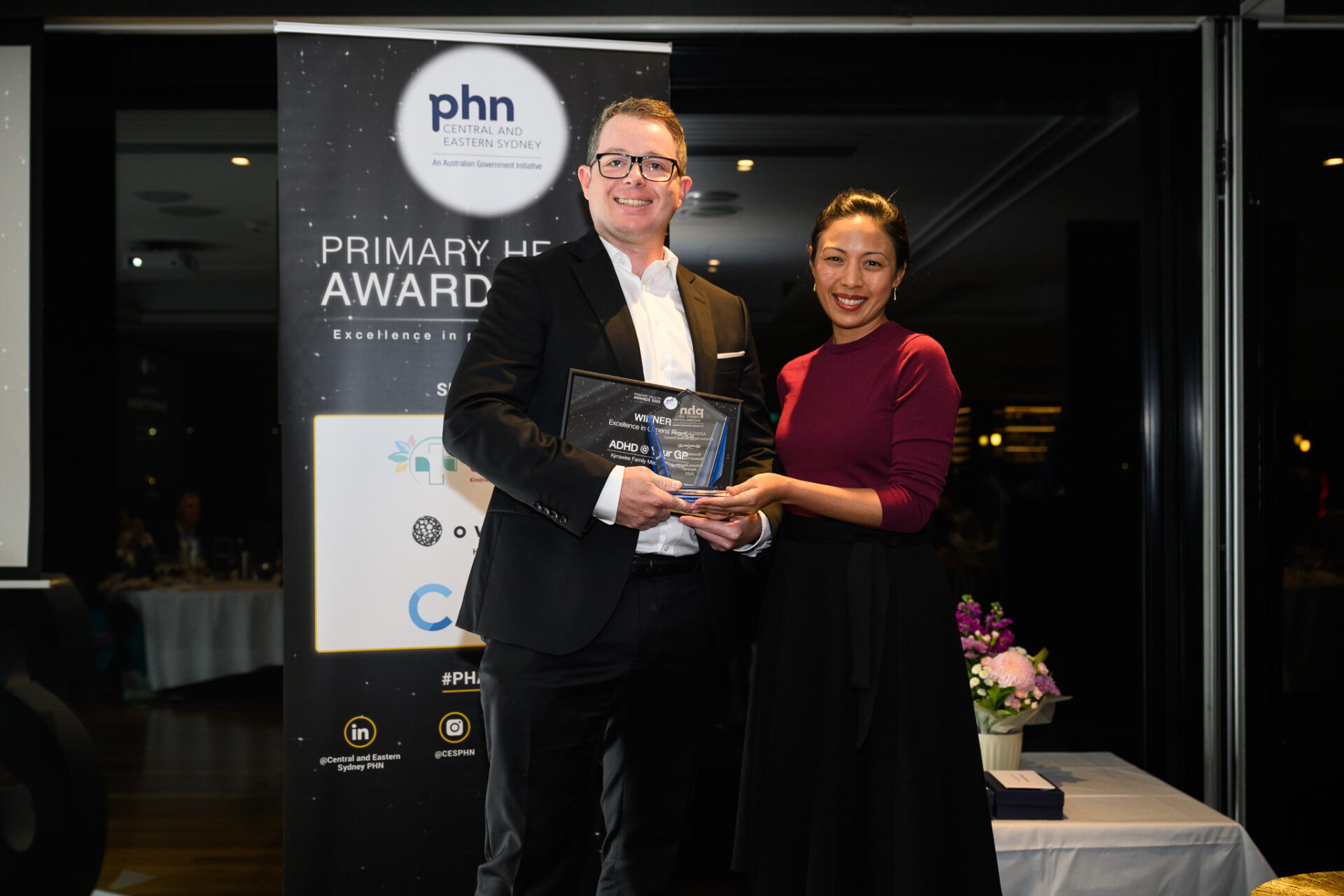
FIVE QUESTIONS is where we ask members of the community to talk about how they stay HEALTHY. GP, podcaster and author, Dr Chris Timms (pictured with a Kirrawee Family Medical Practice colleague holding the Excellence in General Practice Award at the 2025 CESPHN Primary Health Awards), has recently published his second book, Slay Dragons, Live Better: The Surprising Science of How Dungeons & Dragons Improves Your Wellbeing. He stays healthy by meditating, eating healthily and socialising.
1. What did you eat yesterday?
Breakfast was a smoothie with berries, spinach and nuts. Lunch was a salmon toastie with spinach, and dinner was a Mexican bean mix with salad.
2. What exercise did you do yesterday?
A pram walk in the morning with my little one, then an afternoon gym session with battle sleds and boxing.
3. When did you last see a primary health professional?
About a month ago for my flu vaccine.
4. What do you do to improve your mental health?
A few things, and I’ve come to believe mental health is less about one big fix and more about stacking small, consistent practices. For me that means moving my body, eating well, getting out into nature – particularly walks and time at the beach – and meditation.
But the piece people most often underestimate is social connection. The research now puts chronic loneliness alongside smoking fifteen cigarettes a day for its impact on our health, and as a GP I see it constantly – people who tick every box for a “good life” and still describe themselves, quietly, as alone.
One of the most effective things I do for my own mental health is sit around a table with friends playing Dungeons & Dragons and Blood on the Clocktower.
Those nights are genuinely restorative – laughing, problem-solving together, being fully present with other people. It does something a screen never will.
That’s actually what led me to write my book, Slay Dragons, Live Better: The Surprising Science of How Dungeons & Dragons Improves Your Wellbeing. It makes the evidence-informed case that one of the best answers to the loneliness epidemic isn’t a pill, a program or an app. It’s a tabletop game that puts people in a room together, regularly, doing something cooperative, creative and unmistakably human.
5. What are your health goals for the next month?
Honestly, just to keep the routine going through winter — between the seasonal viruses and all the daycare bugs doing the rounds, consistency feels like the win.
Immunisation Weekly Update: Welcome to our weekly Immunisation Update! In this week’s update, read about: Power outage preparedness: Are you ready for summer? Capvaxive stock available Video explainers: Measles and Pneumococcal vaccines CESPHN Immunisation Without Borders: Measles resurgence, travel health and safeguarding Australia webinar Order NIP schedule – updated October…
Excellence in primary health care celebrated at CESPHN’s Primary Health Awards Central and Eastern Sydney Primary Health Network (CESPHN) is proud to announce the winners of the 2026 Primary Health Awards, recognising excellence, innovation and quality improvement in primary health care across the region. The annual awards recognise primary health…
Clinician Alert: Red Imported Fire Ants Detected in Sydney A red imported fire ant nest has been detected and treated at the Enfield Intermodal Logistics Centre in Sydney’s inner west. While surveillance has not identified any additional nests and the likelihood of fire ant-related presentations is currently considered low, NSW…
Immunisation Weekly Update: Welcome to our weekly Immunisation Update! In this week’s update, read about: NSW seeing increase in reported cases of bat bites and scratches Personalised childhood vaccination schedule Vaccination during pregnancy: a guide for health professionals AIR Vaccine Type field updated New NIP schedule available: order now Education …
Non-registered practitioner in Redfern may have placed clients at risk NSW Health and the NSW Health Care Complaints Commission (HCCC) were recently made aware of a non-registered practitioner who has been providing cosmetic and other health services, including invasive procedures, from a private residence in Redfern. The HCCC has issued…